Overview
Four automatic gantry wash stations support the Sanming blast-furnace capacity-replacement project, sited at four gateways across the material and slag lines, with data-acquisition ports reserved for upload to the control platform as required by the Technical Guide for Ultra-Low Emission Retrofits in the Steel Industry.
Client Profile
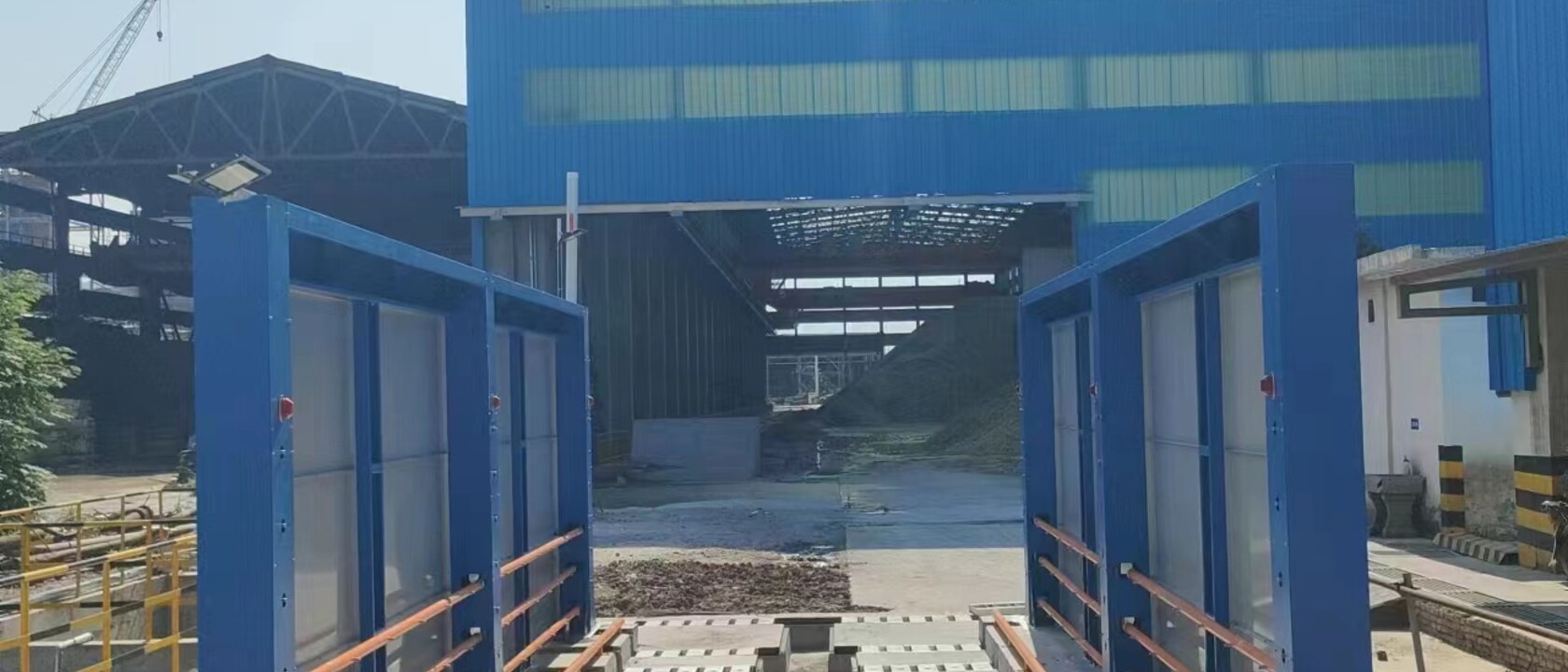
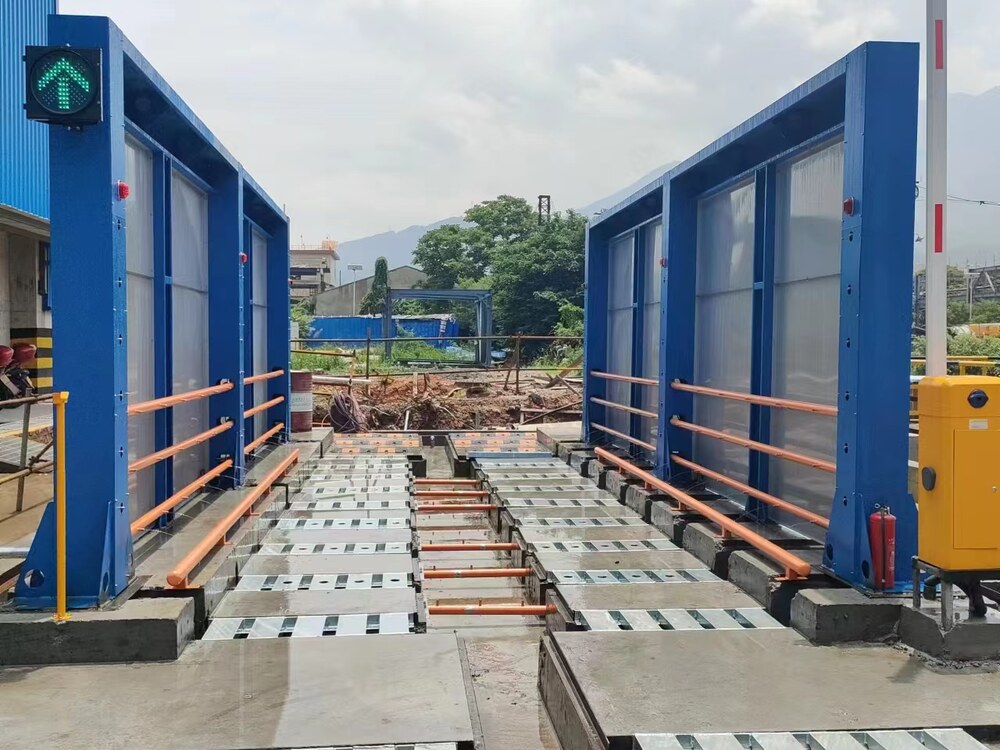
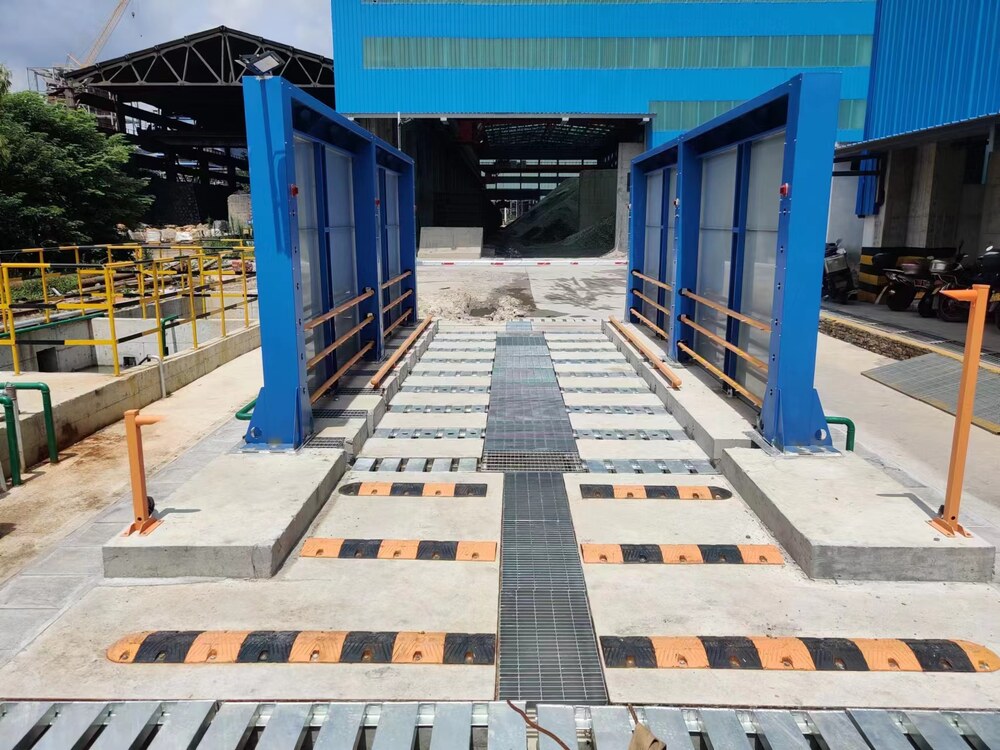
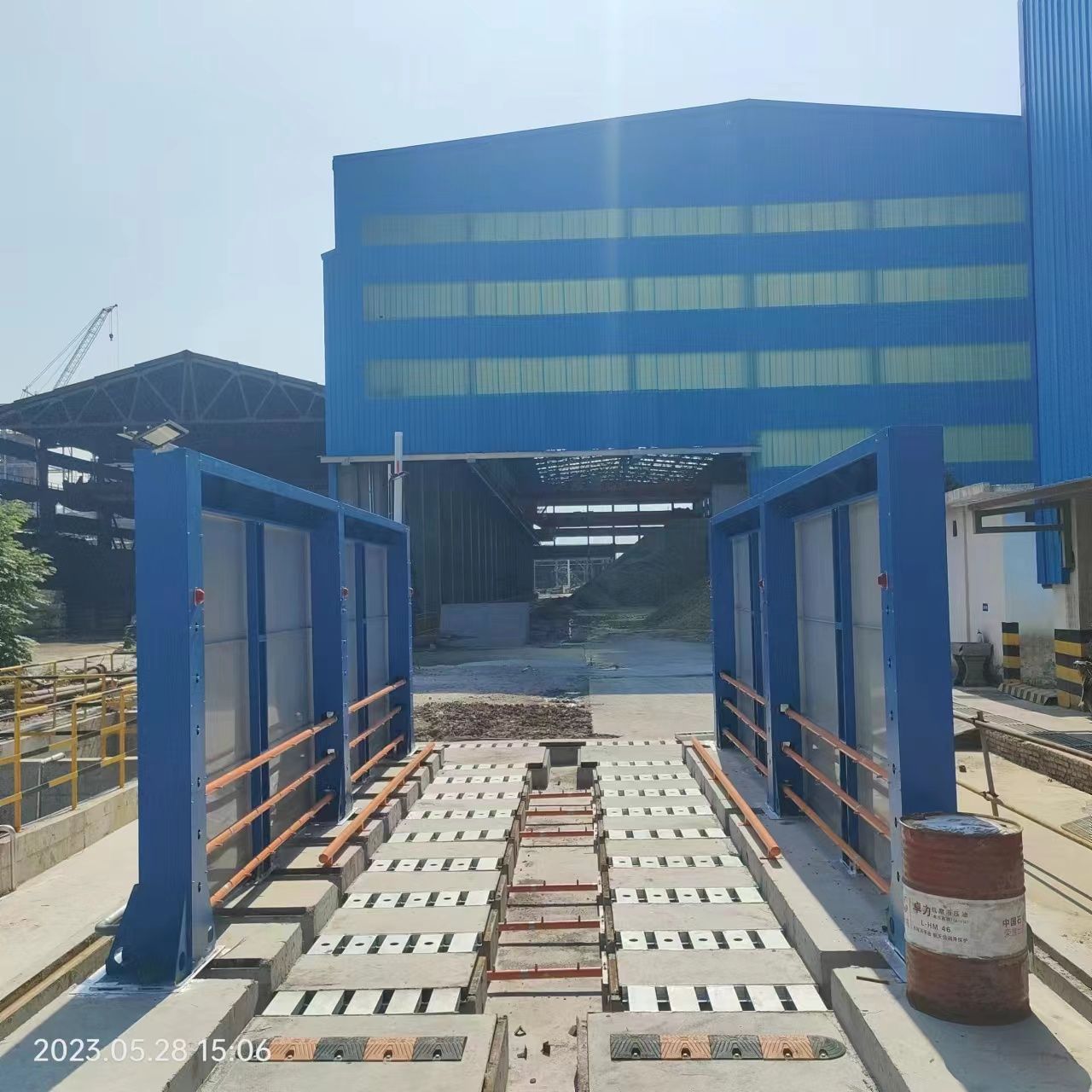
The project covers the automatic gantry wash stations for the Sanming blast-furnace EPC package of Fujian Sangang Minguang’s steel capacity-replacement programme — four units in total, at the No. 2 material line north gateway, the slag north gateway, the No. 2 material line south gateway and the slag south gateway. Each unit uses a modular design of underbody and twin side-spray lines: the underbody system washes chassis and tyres, the side system washes both flanks and tyre sidewalls, with air-dry/shake follow-up.
The Challenge
- The four units serve four gateways with differing dimensional needs: the No. 2 material line north and slag north gateways require a 12 m × 4.6 m × 5.5 m wash zone, while the No. 2 material line south and slag south gateways require 15 m × 4.6 m × 5.5 m.
- Compliance with the national Technical Guide for Ultra-Low Emission Retrofits in the Steel Industry requires reserved data-acquisition ports for guaranteed upload.
- Uploaded data must at minimum include vehicle entry/exit time, wash time, licence plate and its recognition photo, station start/stop status and operating parameters (pump status, wash-system pressure, make-up water status, valve open/close, fan status), and support record queries by plate or by time.
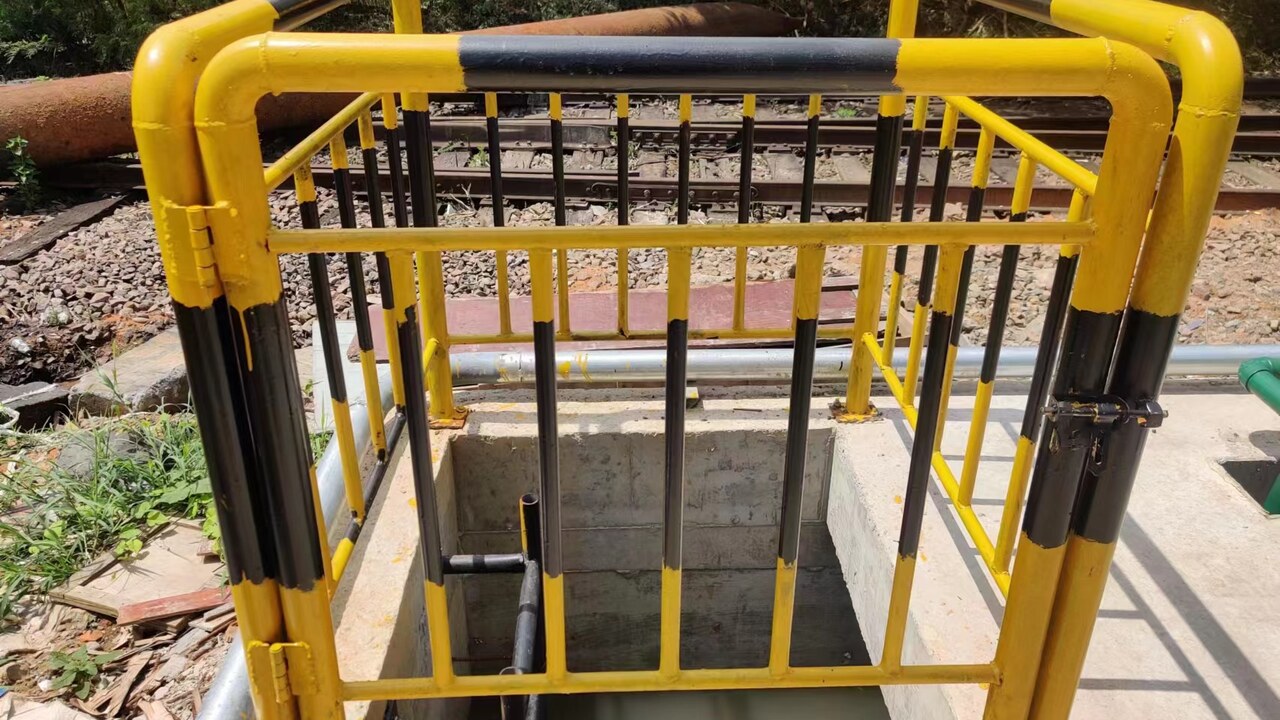
- The foundation must be designed for 150 t traffic, and wash water must be collected and reused.
- Drainage requires engineering treatment so the surface neither ponds, freezes nor leaks, using a guided-flow design.
- Wash plus air-dry time must be no less than one minute per vehicle.
The Solution
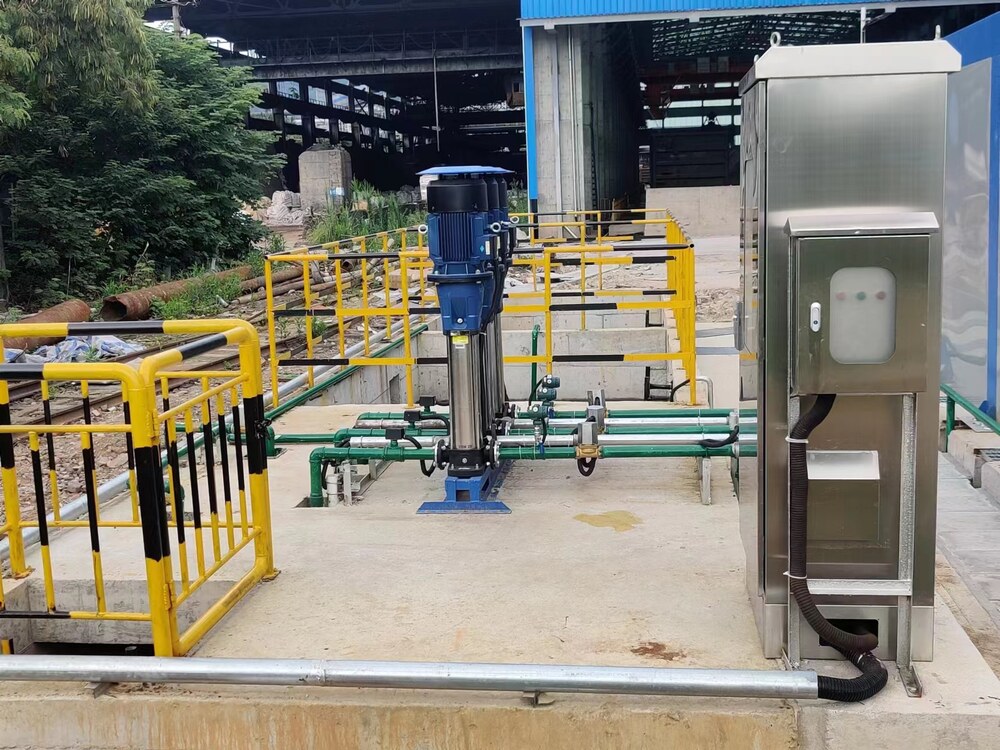
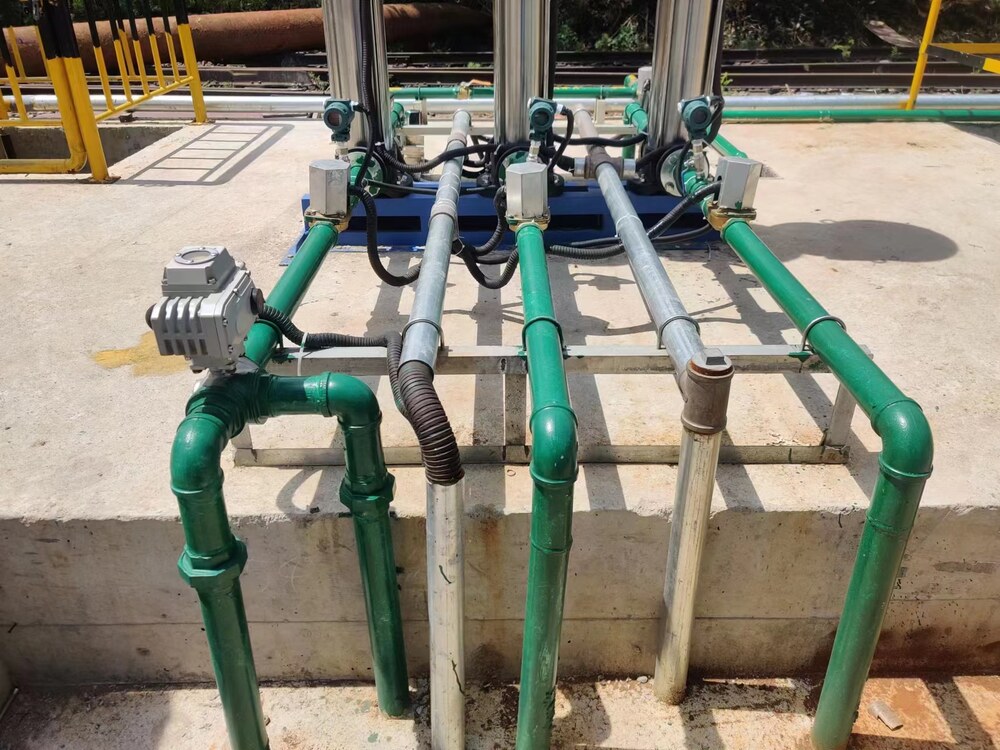
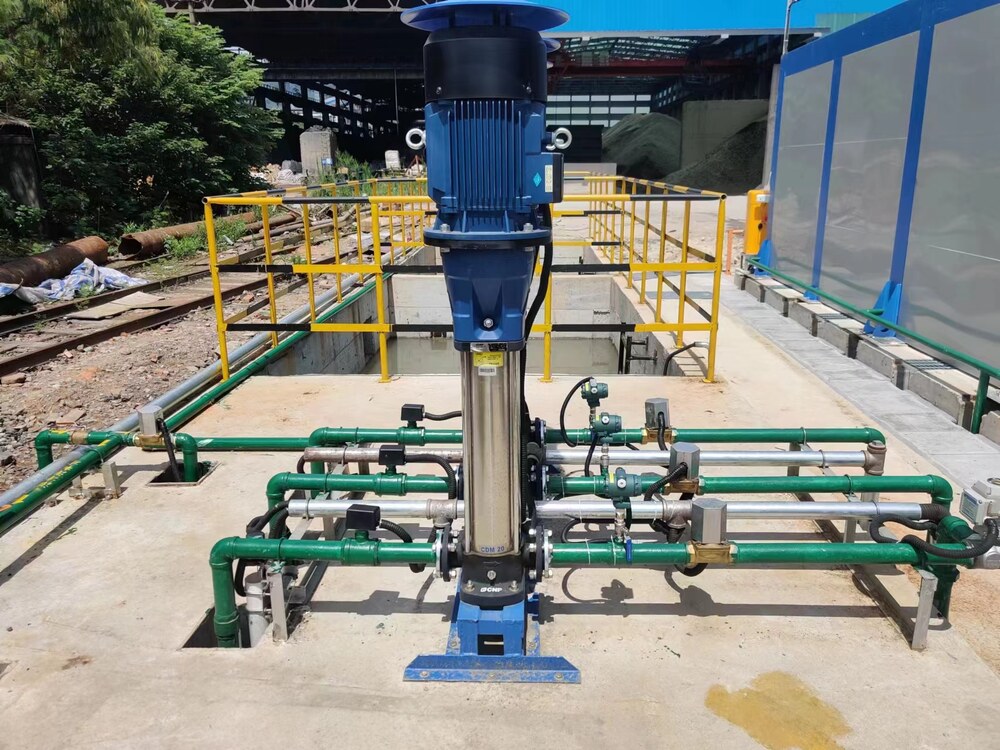
Washing and data form one closed loop: wash zones are custom-linked in series with air-dry/drain zones per gateway, wash water is recovered through settling and clear-water tanks (a stainless-steel above-ground tank at the No. 2 material line north gateway), and wash records plus operating parameters are captured and uploaded to the control platform, directly serving ultra-low-emission monitoring. Site-specific sizing — Sizes were customised per gateway: the No. 2 material line north gateway has a 12 m × 4.6 m × 5.5 m wash zone and an unenclosed 4 m × 4.6 m air-dry/drain zone; the slag north gateway has a 12 m × 4.6 m × 5.5 m wash zone and a 4 m × 4.6 m × 5.5 m air-dry/drain zone; the No. 2 material line south and slag south gateways have 15 m × 4.6 m × 5.5 m wash zones and 5 m × 4.6 m × 5.5 m air-dry/drain zones. Structure and washing — Main frames use GB Q235 cold-rolled carbon steel plate with integral bending, hot-dip galvanising and anti-corrosion powder coating; wash piping is DN50 galvanised steel with an independent layout for easy maintenance; the side-spray system is custom-built at 3.5 m with switchable 1.5 m; nozzles are 304 stainless steel. The air-dry system uses six 5.5 kW fans with ramps and vertical air knives. Recognition and safety — A vehicle recognition system at the wash tunnel exit photographs plates and uploads them to the client’s archive. Night-vision HD cameras (box type) are installed inboard and outboard of the entry and exit, with a recorder and storage disk plus a reserved remote-communication interface. Infrared beam detection includes safe-avoidance logic, alongside speed-limit and height-limit signs, anti-collision bars and safety signal lights. Intelligent control and desilting — A Siemens PLC provides automatic control, counting, fault detection and alarming, with settable wash time, automatic air drying, automatic make-up water, level detection, monitoring photographs and false-trigger prevention; a touch-screen Chinese HMI shows operating status and intelligent error messages. A desilting line flushes the tunnel trench at one touch, reducing manual cleaning. Water treatment uses settling and clear-water tanks.
Project Details
- 设备细节 · 控制柜与泵组 | Detail · control cabinet and pumps
- Four stations are laid out at the four gateways across the material and slag lines, each sized to its site.
- Wash plus air-dry takes no less than one minute per vehicle, with water use of 500 L per vehicle.
- Wash records and operating parameters (pump status, wash-system pressure, make-up water status, valve open/close, fan status) are captured and uploaded to the control platform with query by plate or time, directly supporting ultra-low-emission monitoring requirements.
- The vehicle recognition system photographs and uploads plates at the exit to the client’s archive, enabling traceable management of washed vehicles.
- One-touch automatic flushing of the tunnel trench reduces manual desilting workload; water treatment recirculates through settling and clear-water tanks.
- Warranty of 12 months from acceptance, with lifetime repair service.
When environmental regulation demands verifiability, the wash station’s role changes: it also becomes a data-acquisition terminal. By connecting and uploading wash records and operating parameters, compliance shifts from “we say we comply” to “the data says we comply”.
Project Gallery