Overview
The automatic vehicle wash system for Hubei Energy’s Xiangyang (Yicheng) 2×1,000 MW ultra-supercritical coal-fired units, coded down to equipment level per the power plant identification system standard, with a wash capacity of ≥60 vehicles per hour.
Client Profile
The Xiangyang (Yicheng) 2×1,000 MW ultra-supercritical coal-fired project is located near Liangyan Village, southwest of Xiaohe Town, Yicheng City, Xiangyang, Hubei, with the site centre at N31°46'48.84", E112°7'44.96". The current phase builds two 2×1,000 MW ultra-supercritical coal-fired units with flue-gas desulphurisation and denitrification, allowing for future expansion. The site is Class III with a peak ground acceleration of 0.065 g (seismic intensity VI); existing data indicate the foundation soil is strongly corrosive to steel structures. Design coal is raw coal from the Xiaobaodang mine of Shaanxi Coal and Chemical Industry Group, delivered by rail.
The Challenge
- A wash rate of ≥60 vehicles per hour is required, matching the high-frequency washing needs of coal-delivery vehicles.
- The footprint must be contained within a range exceeding 10 m × 3.7 m.
- Because the foundation soil is strongly corrosive to steel structures, steelwork surfaces must be hot-dip galvanised.
- Wash water is reuse water at about 0.3 MPa, so the design must suit reuse-water conditions.
- The project applies the national standard GB/T 50549-2020 (Coding Standard for Power Plant Identification Systems): technical documents (including data and drawings) and equipment nameplates must carry power plant identification codes, coded to equipment level, with piping systems coded down to valves, strainers, instruments and lines.
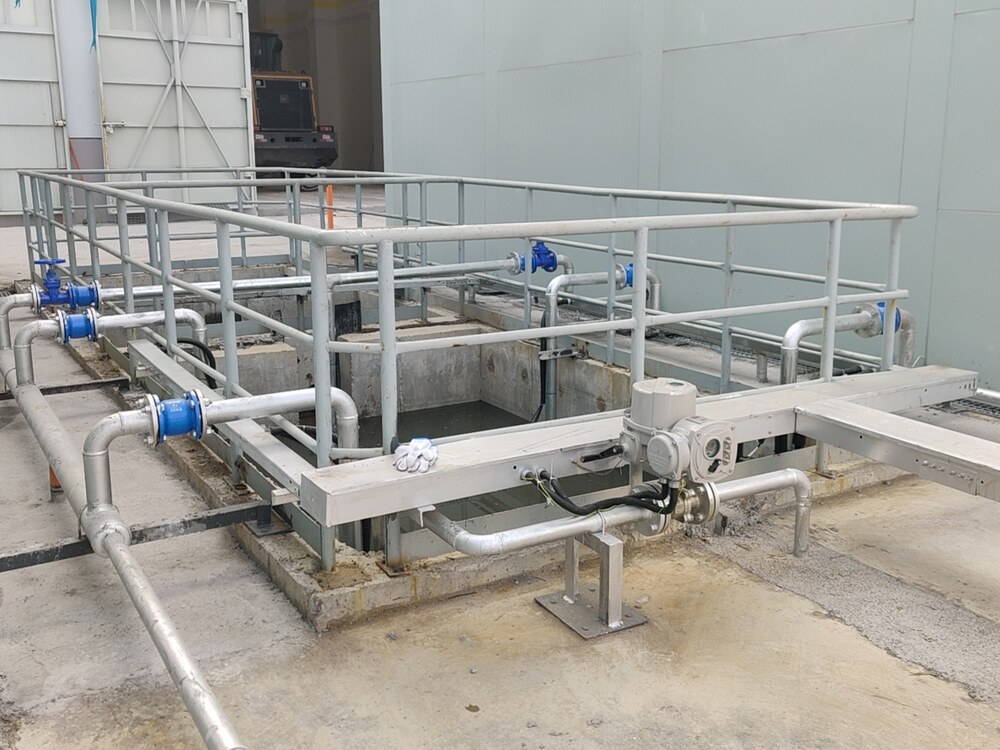
- Sludge removal is specified as settling-basin discharge, with infrared sensing plus system start and electrical control.
The Solution
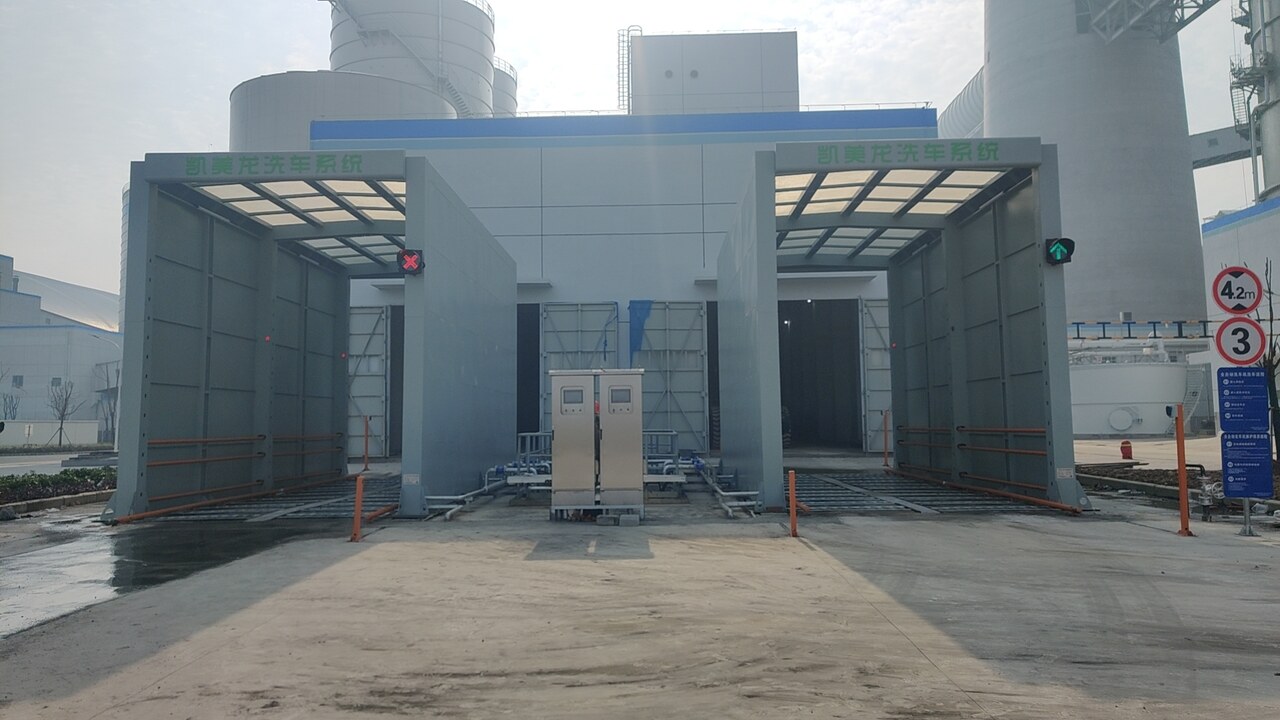
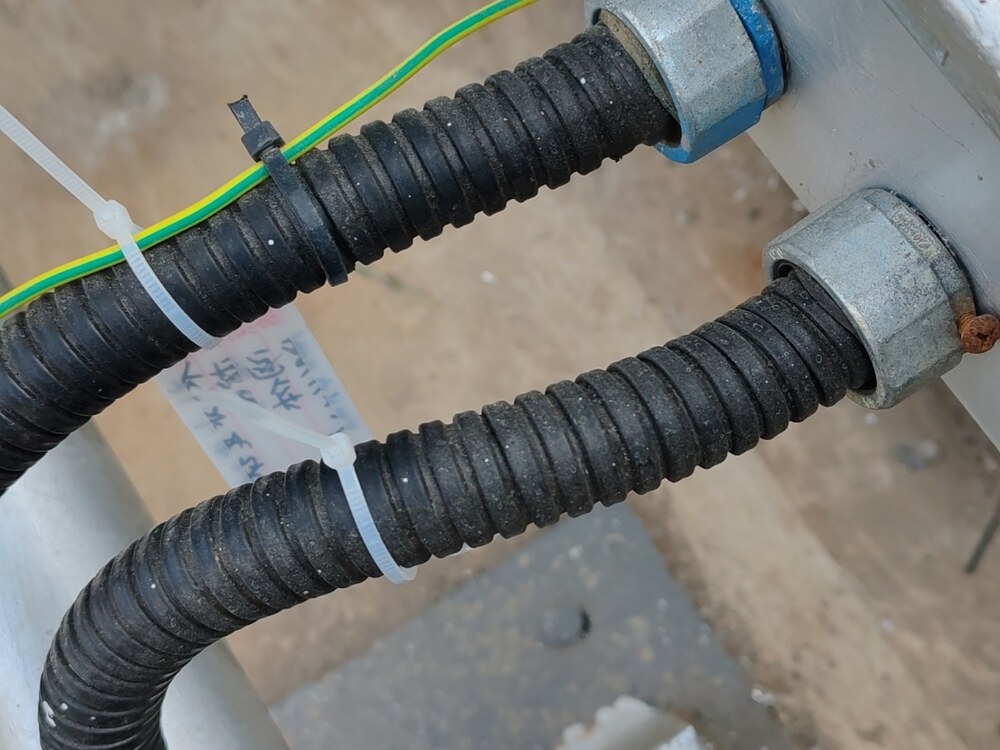
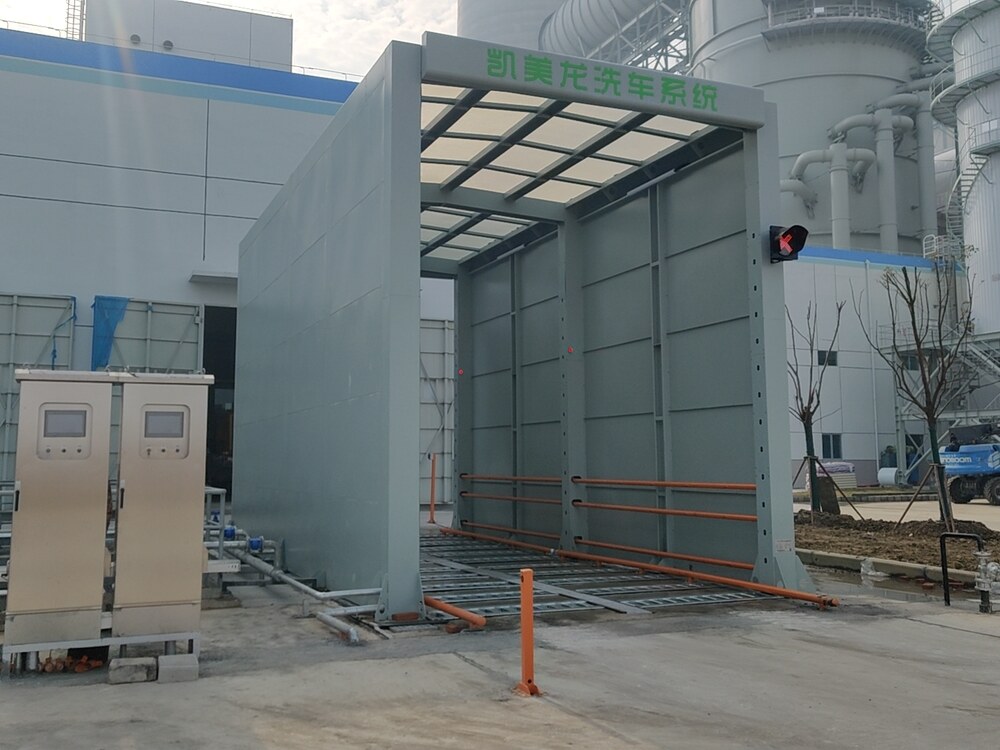
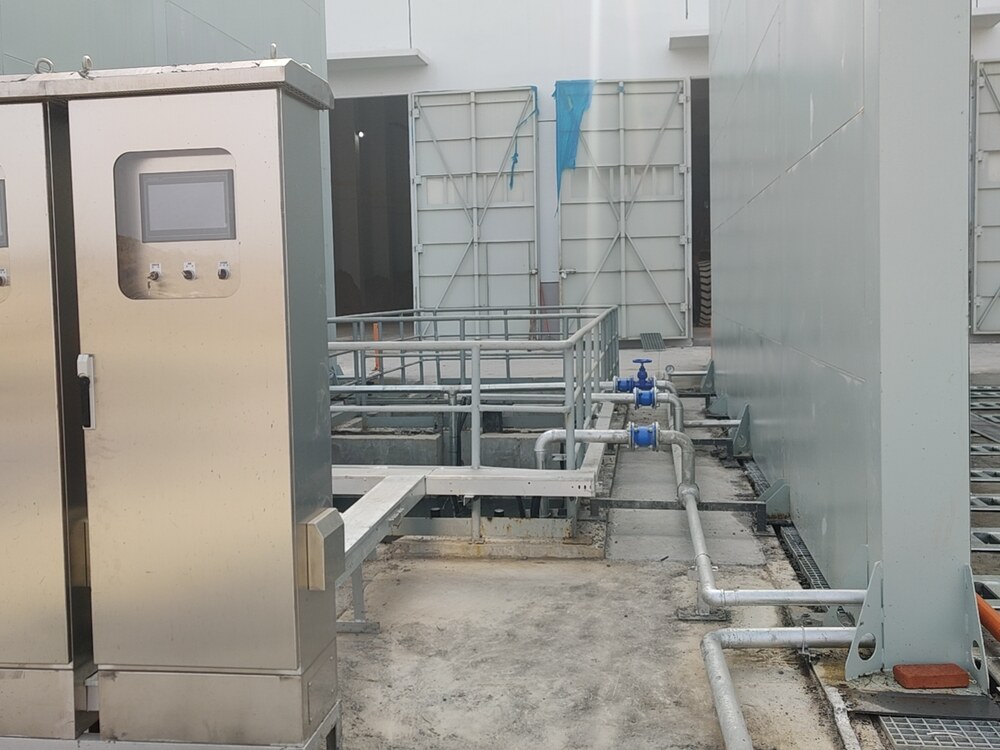
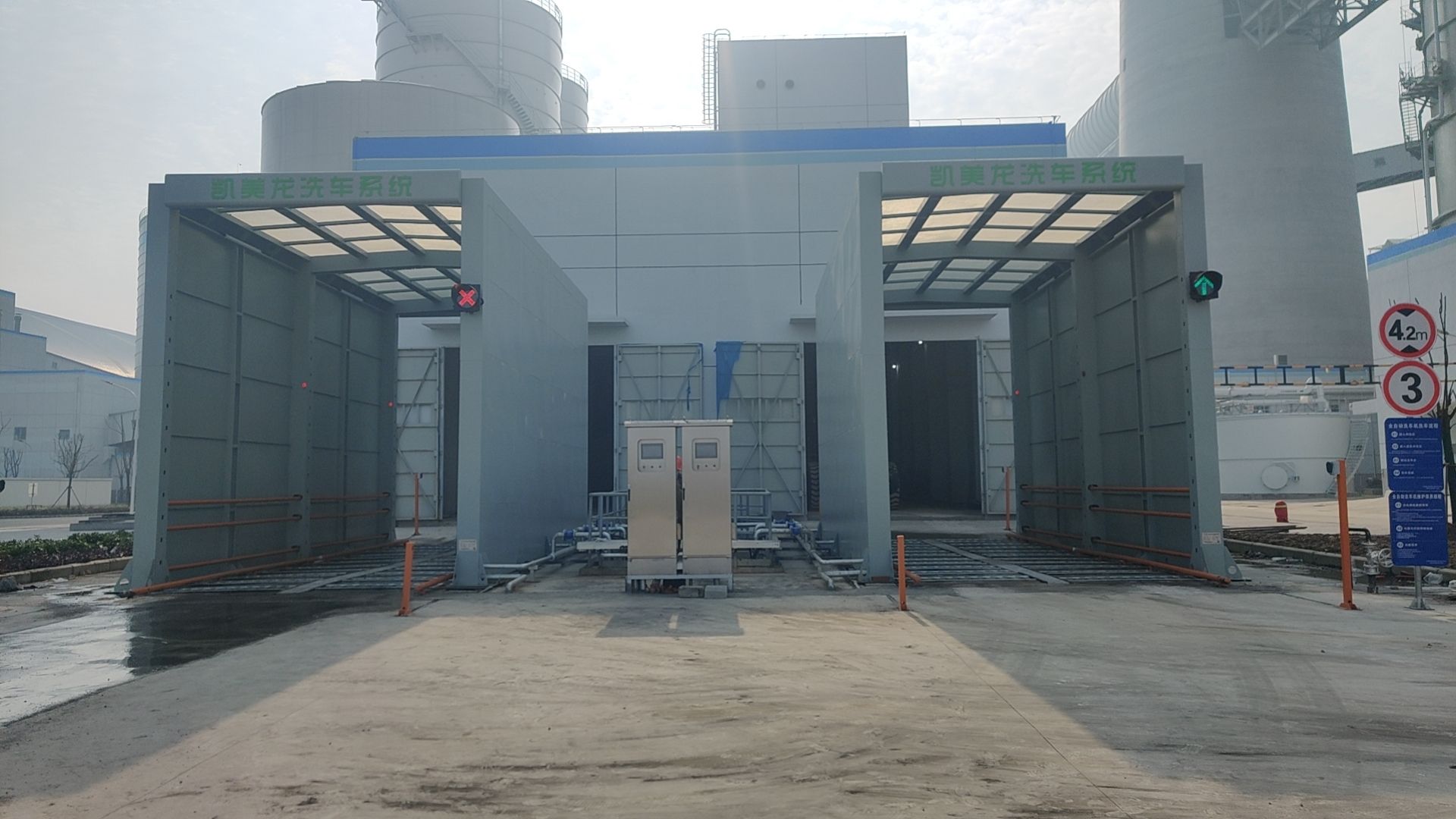
Washing and recovery form one closed loop: the automatic vehicle wash system is supplied as a complete set, with 200 direct-current stainless steel nozzles in the effective wash zone; reuse water is used for washing and returned after settling-basin sludge discharge; and all steelwork is hot-dip galvanised to withstand the strongly corrosive foundation soil. 设备安装实拍 · 装置与控制柜 | Installation · unit and control cabinet Complete-set supply — The automatic vehicle wash system (first batch of vehicle packages) and its auxiliary systems are supplied as a complete set; the seller bears full responsibility for all equipment within the supply scope, including auxiliary systems, equipment and accessories. Wash system — The effective wash zone contains 200 direct-current stainless steel nozzles; wash water is reuse water at about 0.3 MPa, with effective nozzle pressure of no less than 0.4 MPa; capacity is ≥60 vehicles per hour, adjustable to vehicle conditions. Corrosion protection and footprint — Steelwork is hot-dip galvanised to counter the strongly corrosive foundation soil; the footprint is held within limits exceeding 10 m × 3.7 m. Coding and control — Coding follows GB/T 50549-2020 to equipment level, with piping coded down to valves, strainers, instruments and lines and marked on all drawings, schedules, manuals and nameplates. Control uses a switchboard control system with infrared sensing, and sludge is removed by settling-basin discharge.
Project Details
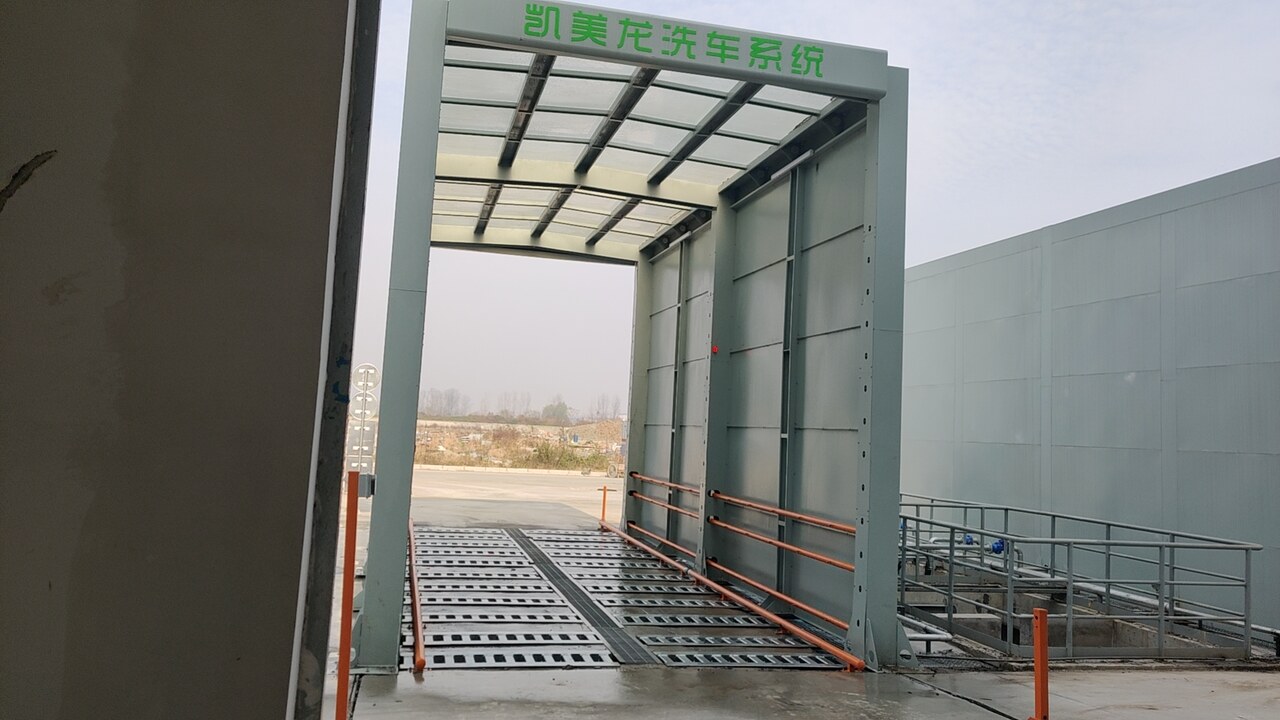
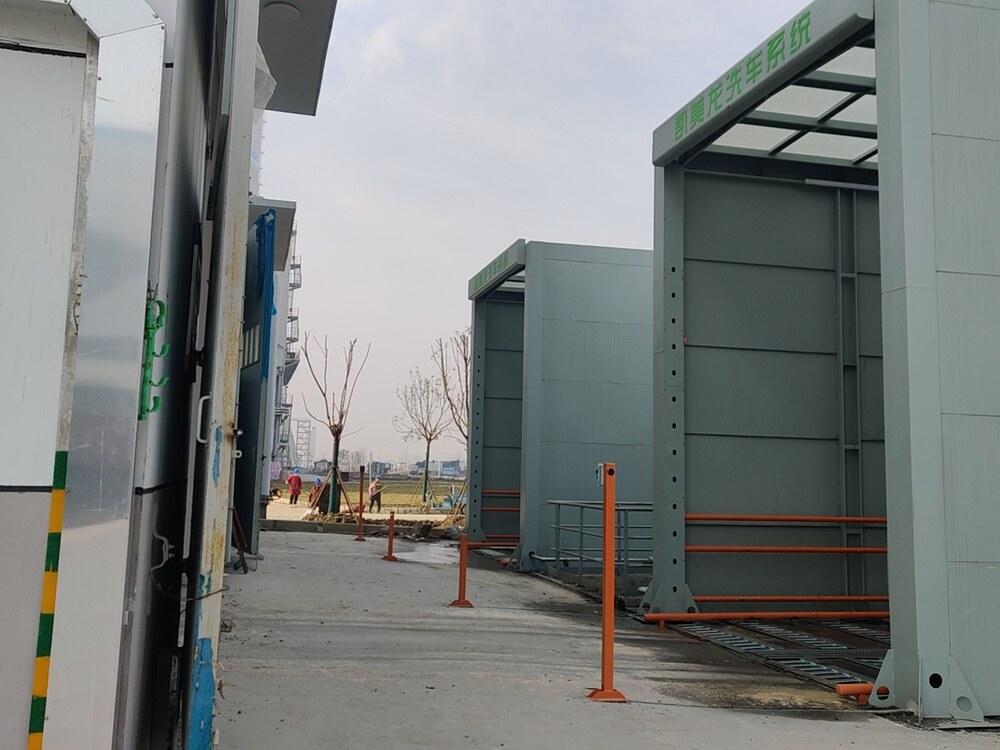
- 装置外观实拍 | Exterior of the wash unit
- A wash capacity of ≥60 vehicles per hour meets the high-frequency washing needs of coal-delivery vehicles for the 2×1,000 MW units.
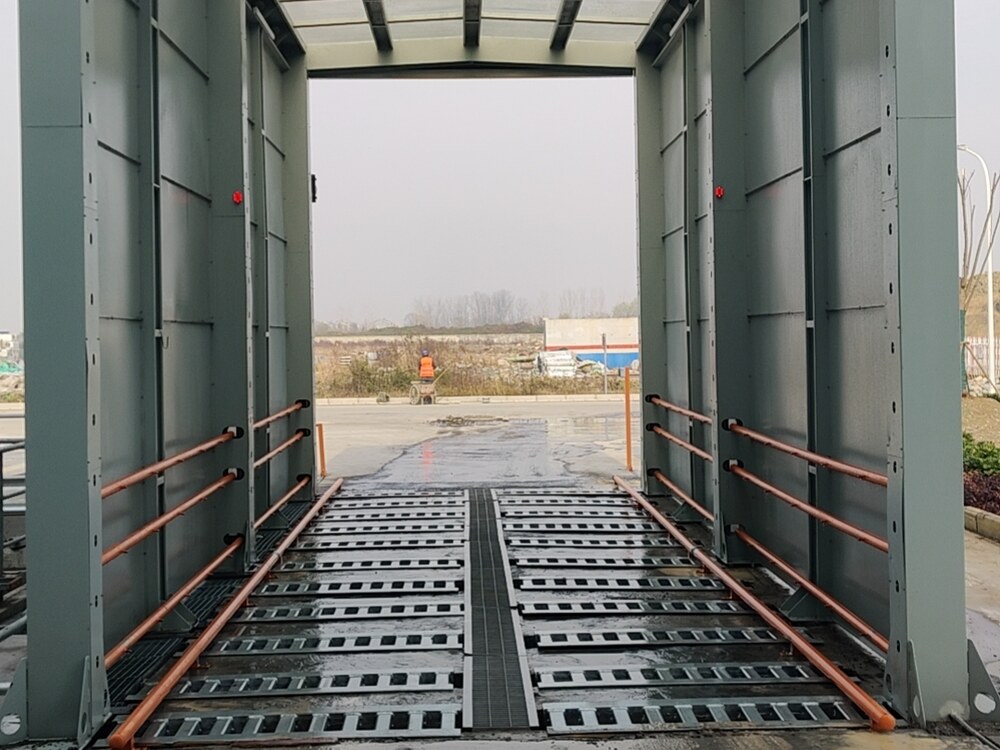
- The effective wash zone contains 200 direct-current stainless steel nozzles; reuse water is used and sludge is removed via the settling basin.
- Hot-dip galvanised steelwork counters the strongly corrosive foundation soil and suits long-term outdoor operation.
- Coding follows GB/T 50549-2020 down to equipment level, with piping coded to valves, strainers, instruments and lines, facilitating later operation, maintenance and spare-parts management.
- The footprint is held within limits exceeding 10 m × 3.7 m, fitting the plant’s general arrangement.
For a wash system in a power project, the deliverable is not just equipment but a full set of verifiable codes. Coding to equipment level and down to valves, strainers and instruments under GB/T 50549-2020 looks like a document-control requirement, but it effectively determines whether the equipment can be operated and maintained correctly once in service.
Project Gallery