Overview
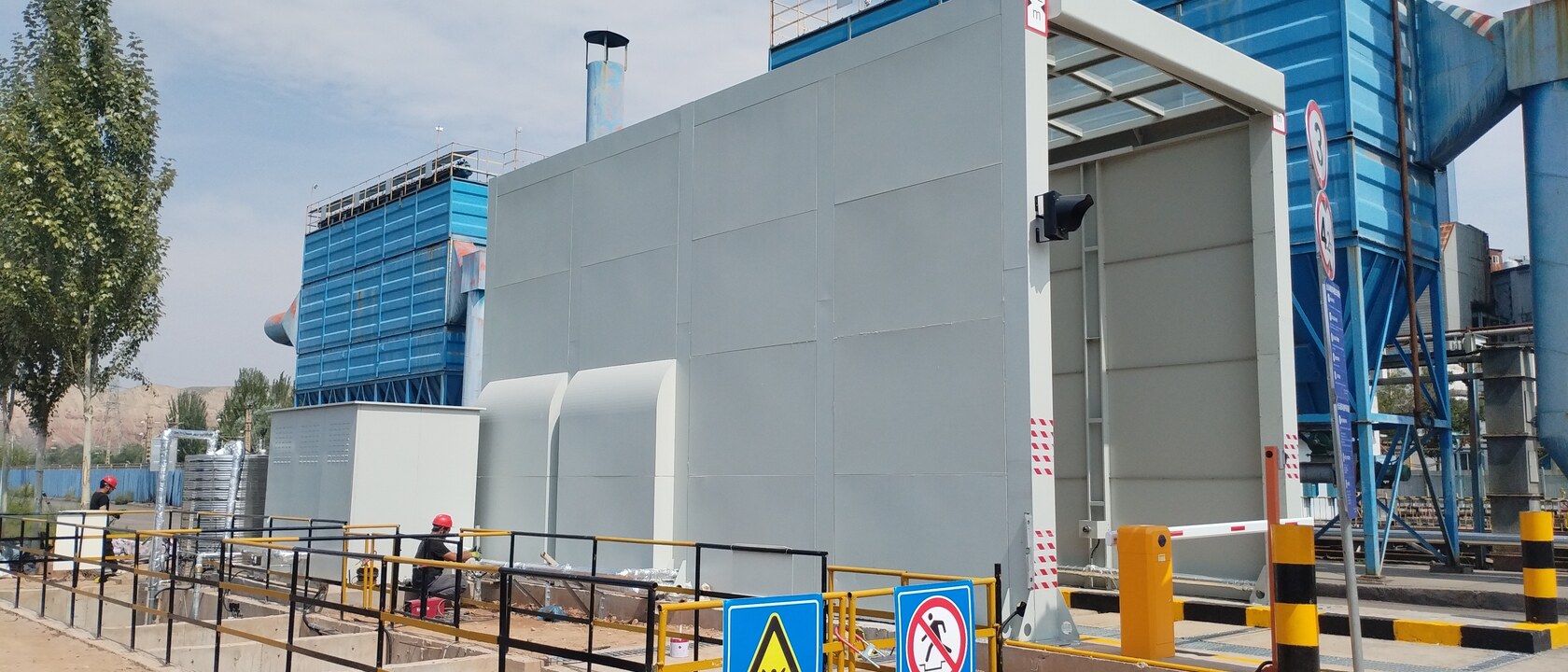
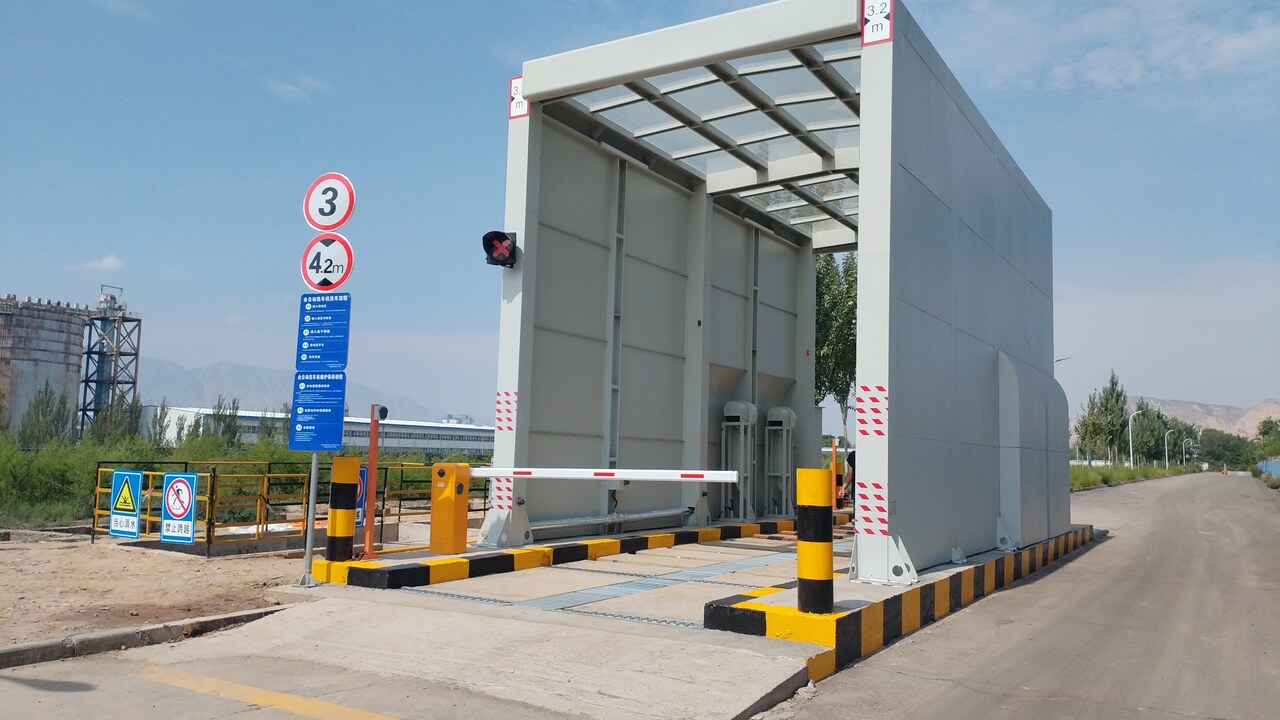
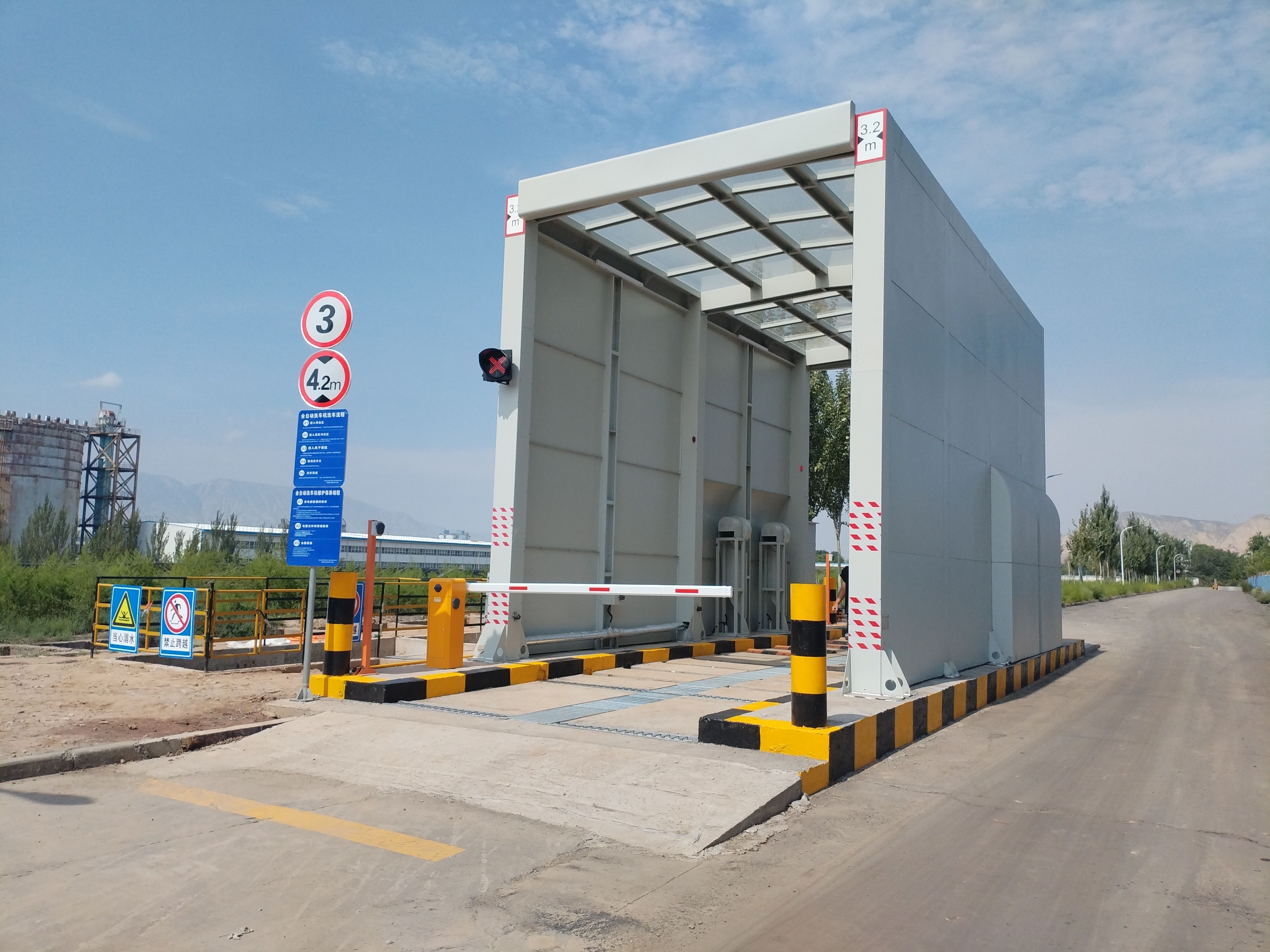
A supporting gantry wash machine for the captive power plant’s coal-yard enclosure project. The KAMRON KM-H3 computerised heavy-vehicle wash machine was delivered together with civil works — reinforced-concrete equipment foundation and settling basin — under a single package.
Client Profile
The contract was signed on 8 July 2024 in Honggu District, Lanzhou, for the “gantry wash machine procurement (including installation) for the captive power plant coal-yard enclosure project (including capacity expansion and stockpiling)”. The site is the client’s captive power plant and the project is self-funded by the enterprise. Under the contract the contractor procures all equipment, materials, spares and special tooling needed for the installation works, and completes installation, commissioning and trial operation per the construction programme before handing over on acceptance.
The Challenge
- The drainage system requires engineering treatment so the surface neither ponds, freezes nor leaks, with a guided-flow design preventing water from spreading and freezing.
- The foundation must be designed for 150 t traffic, and wash water must be collected and reused.
- The air-dry zone needs automatic sensing that starts on vehicle entry and stops promptly after departure to avoid wasted energy.
- The scope includes civil works (reinforced-concrete equipment foundation and settling basin), so equipment and civil works must be completed together and accepted as a whole.
The Solution
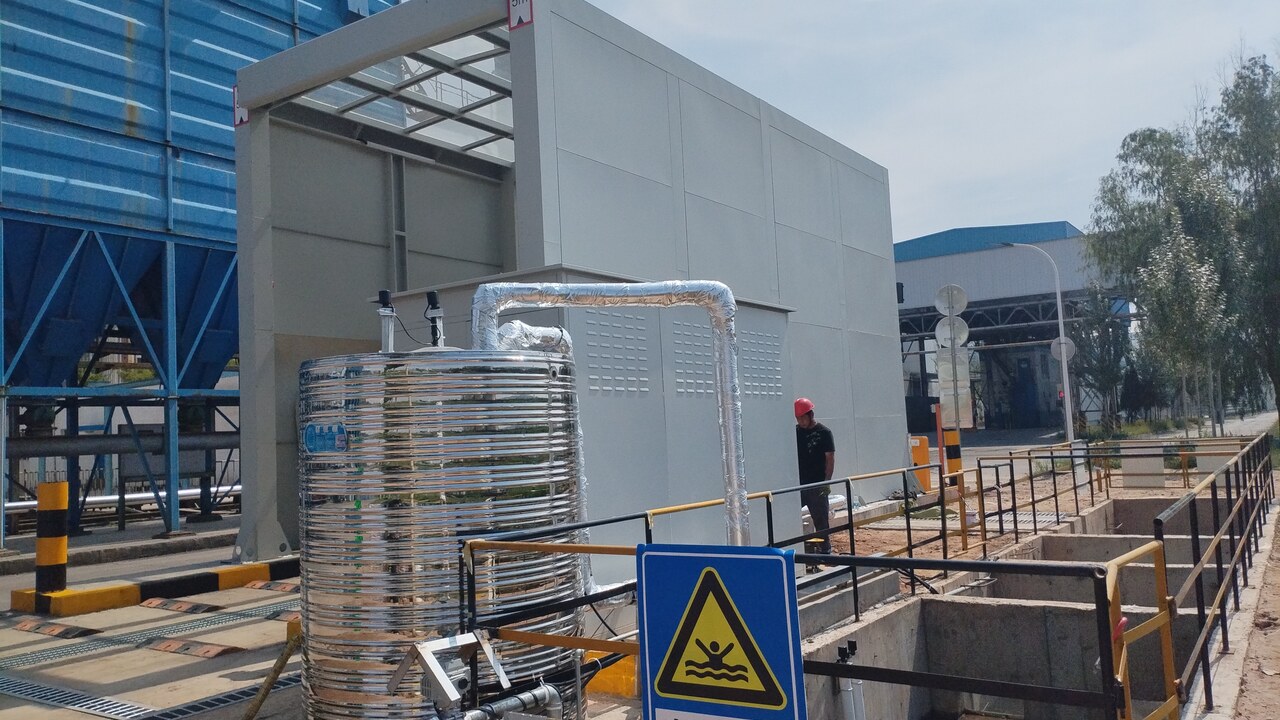
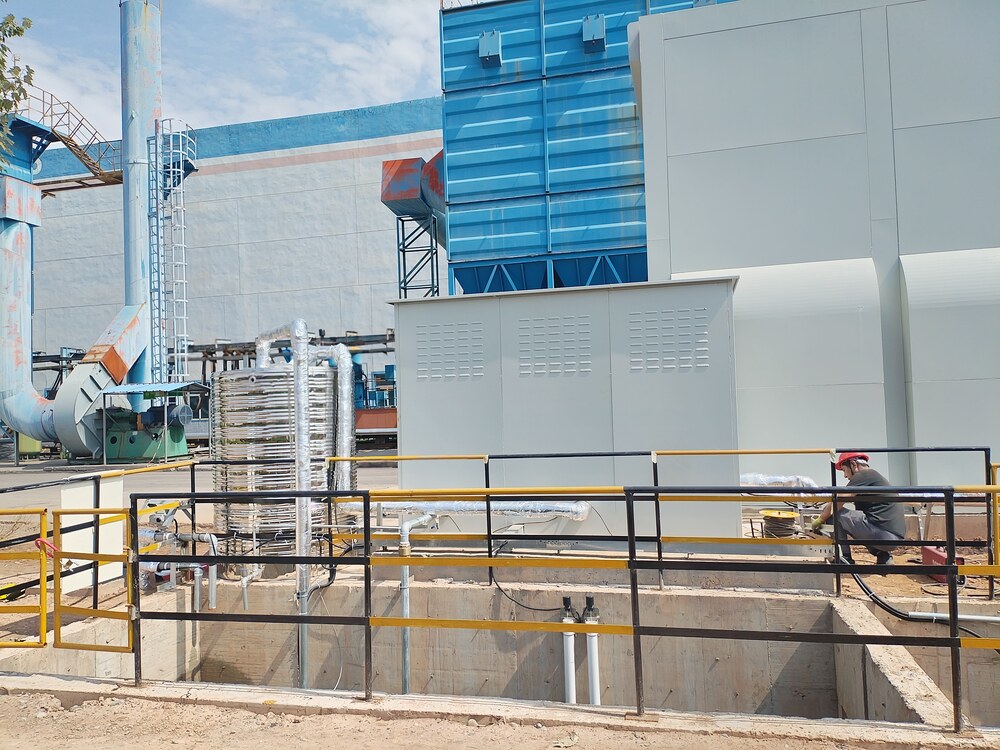
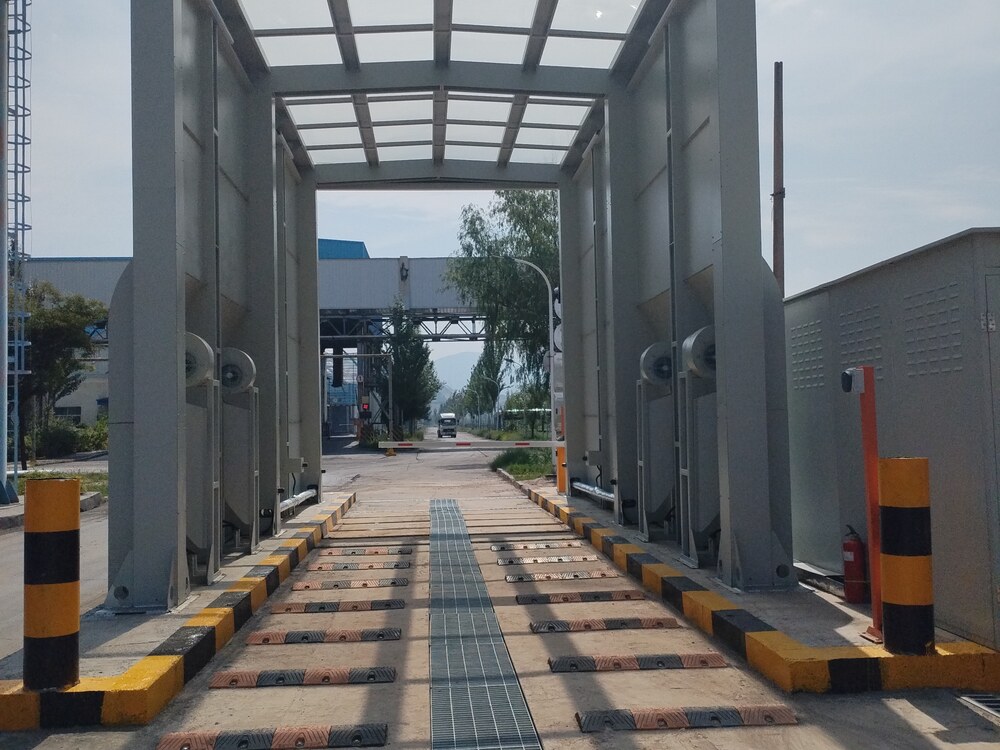
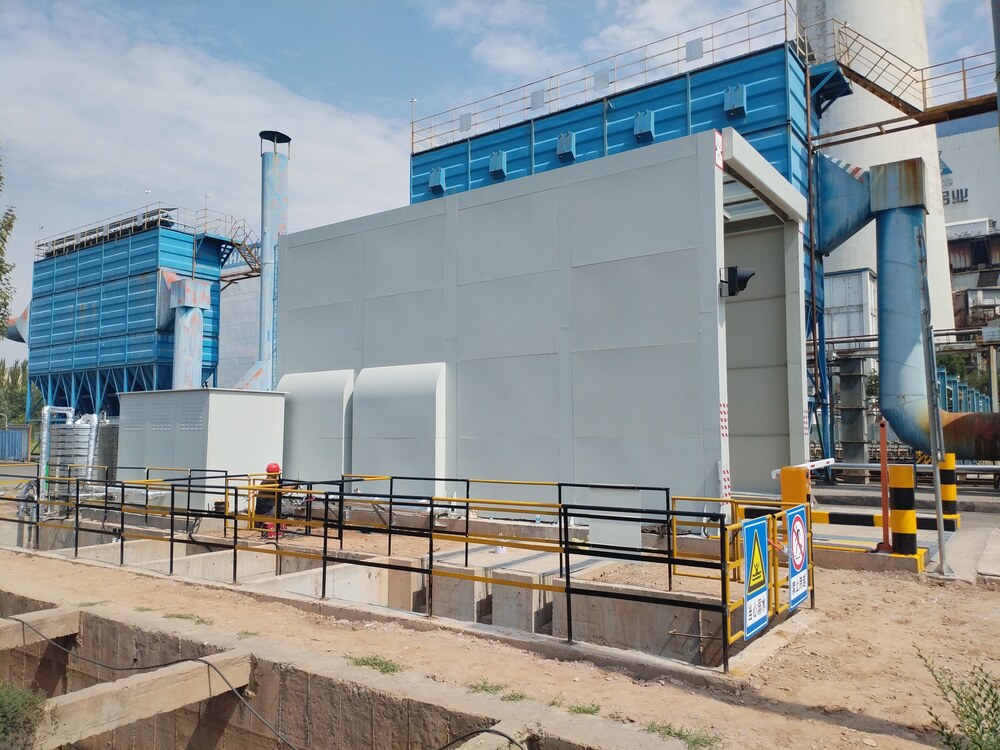
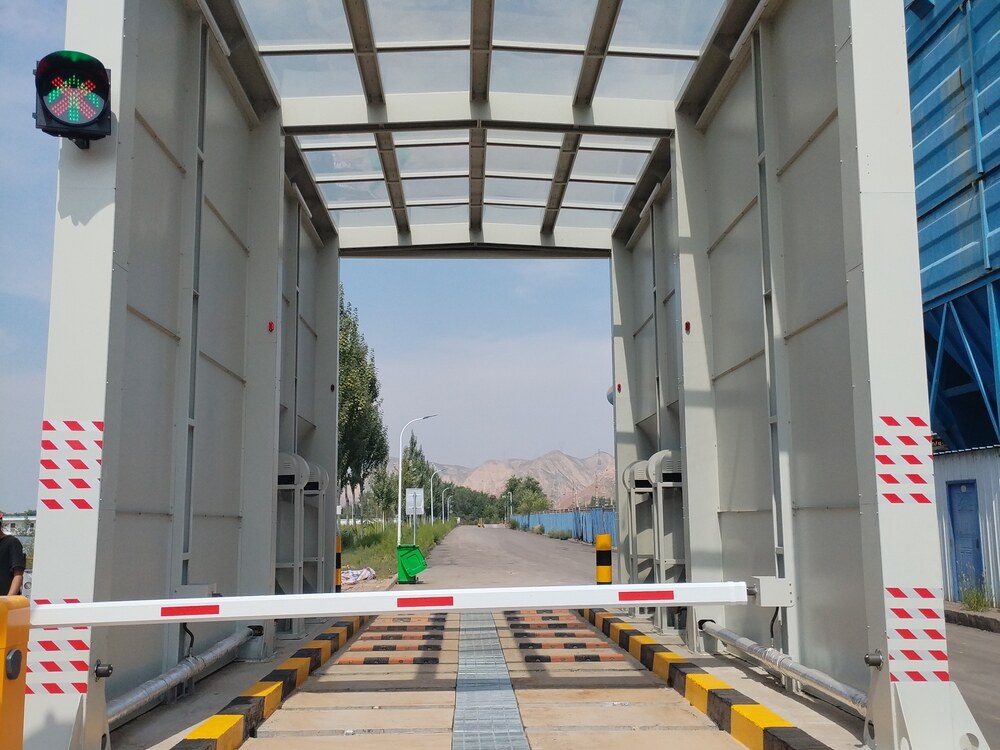
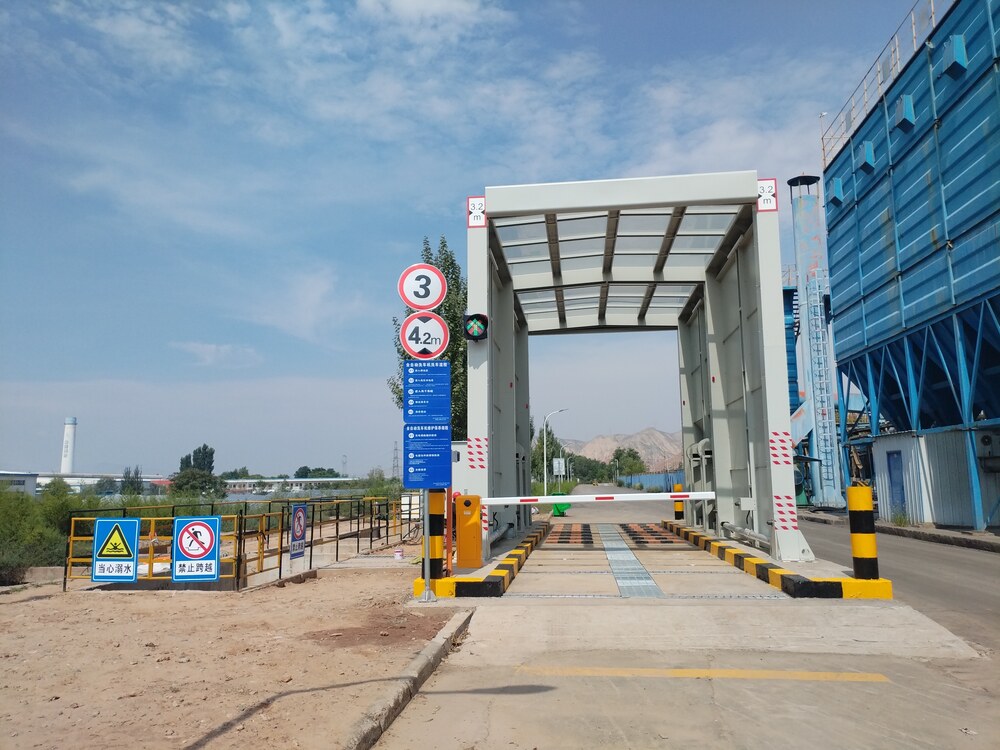
Washing and recovery form one closed loop: a high-pressure drive-through system combining underbody spray, side spray, automatic trench desilting and air drying; wash water is settled and filtered before being recirculated; and the equipment foundation, settling basin and road widening/hardstanding are all completed by the contractor. 沉淀池与回用系统 | Settling basin and reuse system KM-H3 machine — KAMRON KM-H3 computerised heavy-vehicle wash machine: wash zone 4,500 × 4,500 × 5,500 mm, air-dry zone 4,500 × 4,500 × 5,500 mm, drain zone 3,000 mm; overall size 9,000 × 4,500 × 5,500 mm; wash time 10–20 s per vehicle (adjustable), water use 500 L per vehicle, wash pressure 40 bar. Full-vehicle coverage — Comprising underbody spray and twin side-spray lines: the underbody system washes chassis and tyres all round, the side system washes both flanks and tyre sidewalls, supplemented by an automatic trench desilting system and air drying/drainage. Key equipment — One plunger pump at 238 L/min, 40 bar, 30 kW; one centrifugal pump at 15 kW, 20 m³/h, 160 m head; four 5.5 kW air-dryers; seven self-rotating torpedo nozzles; 304 stainless underbody and desilting nozzles. The structure uses 3 mm Q235 cold-rolled plate with integral bending, hot-dip galvanising and powder coating (film ≥90 μm). Control and civil works — A Siemens Smart-series PLC with a touch-screen Chinese HMI provides daily and cumulative wash counts and fault prompts, with infrared sensing for automatic stop/start. Civil works cover the wash platform and three-stage settling basin foundation, road widening and hardstanding, plus all water and power lines.
Project Details
- 设备安装实拍 | Installation on site
- Wash time of 10–20 s per vehicle (adjustable) suits the high-frequency, continuous washing at a power-plant coal-yard gate.
- High-pressure contactless washing avoids damage to paintwork and removes concerns about mirrors, tarpaulins and protruding edges, while accommodating heavy vehicles of widely differing sizes and shapes.
- Automatic sensing starts spraying and stops promptly after the vehicle leaves, reducing wasted energy.
- Wastewater is settled and filtered and then recirculated for washing, saving water.
- The warranty runs for one year from acceptance, with lifetime repair service.
- Equipment and civil works were delivered as one package: reinforced-concrete foundation, settling basin, road widening and hardstanding, and water/power piping all in a single mobilisation, reducing multi-interface coordination costs.
At a power-plant coal yard the requirement is less about “how clean” and more about “high frequency without queueing”. A 10–20 second drive-through rhythm with automatic start/stop is what makes this scenario genuinely acceptable; bundling in the civil works further removes coordination cost for the owner.
Project Gallery