Overview
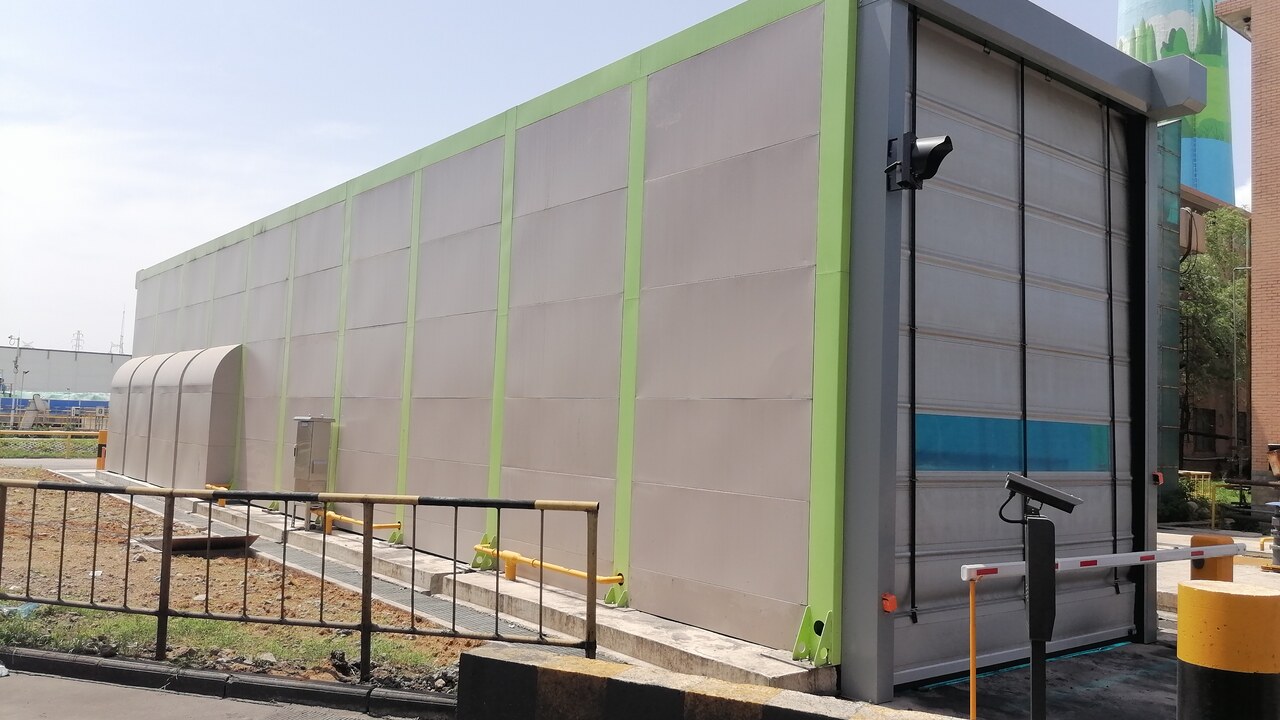
A fully enclosed automatic wash machine for a power plant’s new wash bay, built on a modular grouped structure with an integral load-bearing steel frame and inclined-plate settler, integrating washing, drainage and settled-water reuse.
Client Profile
The project covers the fully automatic wash machine upgrade at WISCO Gangdian, washing heavy vehicles. The equipment is the KAMRON KM-H3 drive-through computerised heavy-vehicle wash system; the wash zone uses a modular design comprising underbody and twin side spray lines — the underbody system washes the chassis through 360° including tyre surfaces and tread gaps, while the side system works in 5 m groups to wash both flanks and tyre sidewalls.
The Challenge
- Washing must cover the body sides, wheels, underbody and tailgate — the tailgate and tyre gaps being the spots most likely to carry mud out of the plant.
- The drainage system requires engineering treatment so the surface neither ponds, freezes nor leaks, using a guided-flow design to intercept water and prevent it from spreading and freezing.
- The foundation must use grating panels able to carry 150 t, keep the wash bay free of standing water and allow wash water to be collected and reused.
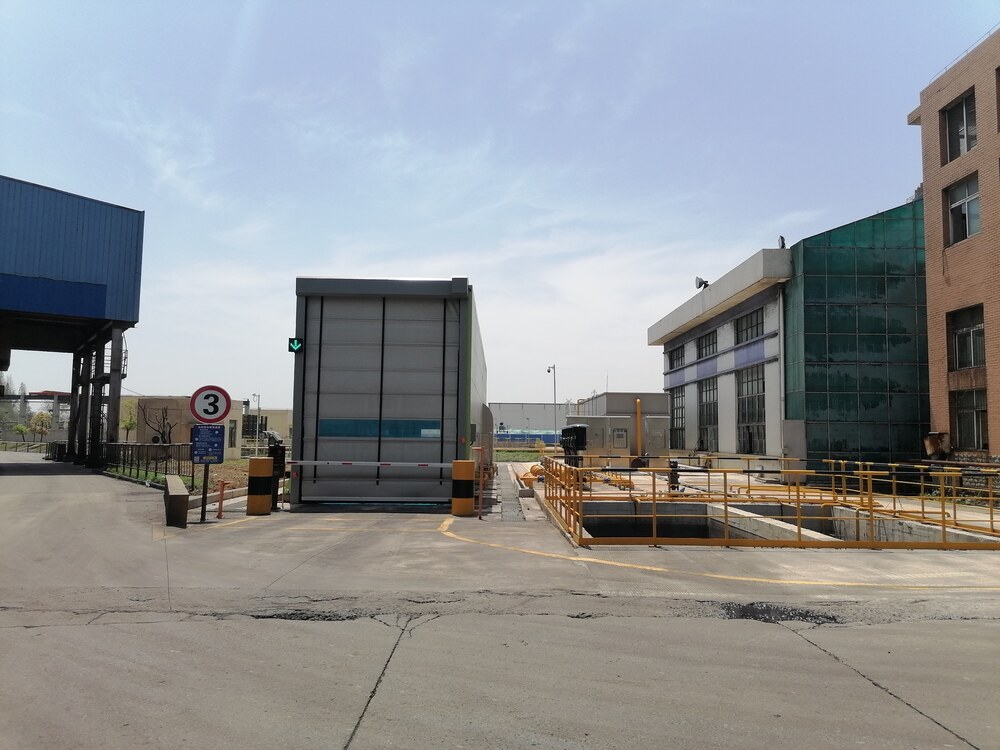
- Warning systems must be complete: speed-limit and height-limit signs, anti-collision guard rails painted in reflective warning colours, safety signal lights, voice prompts and traffic lights.
The Solution
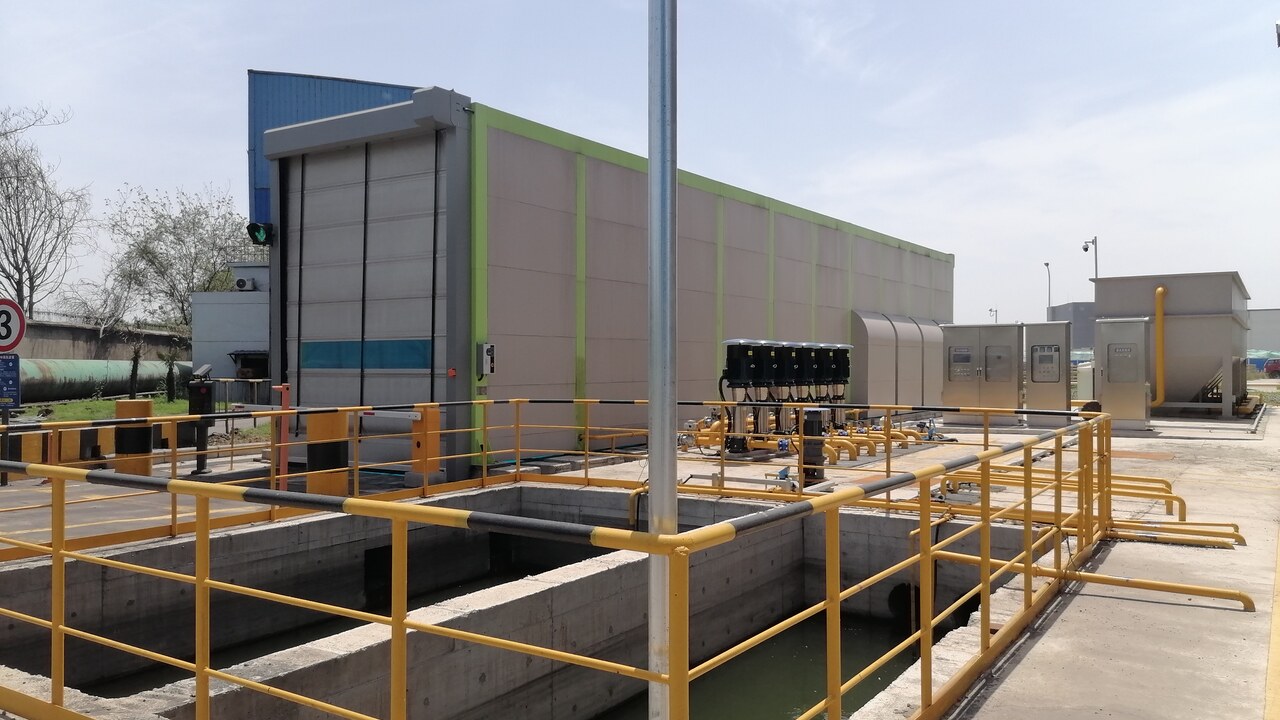
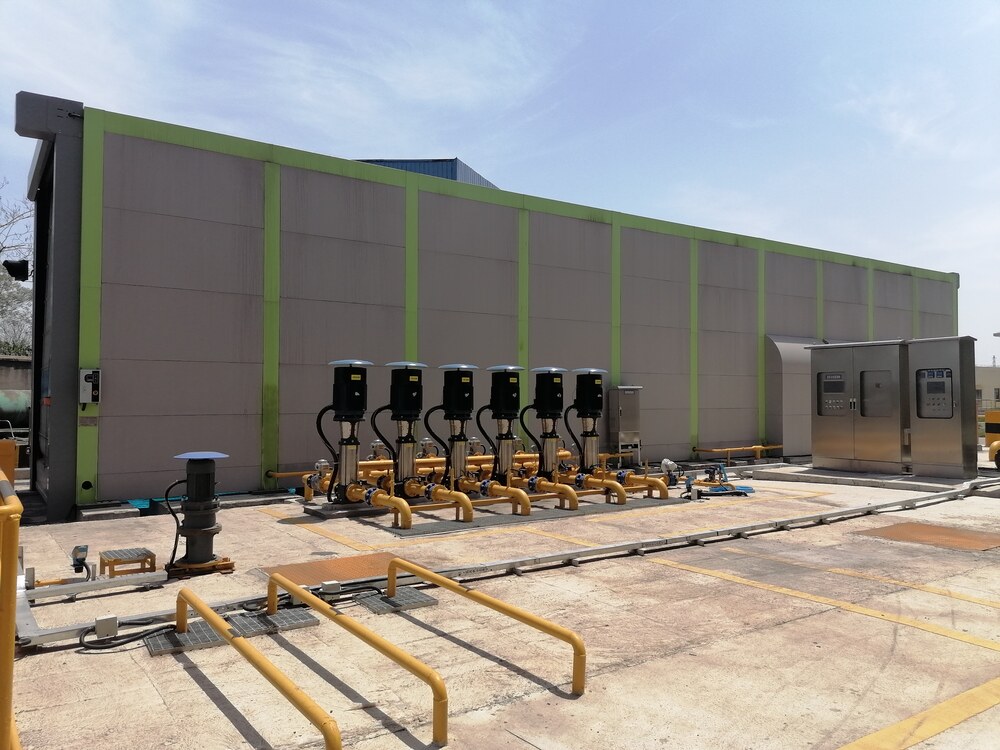
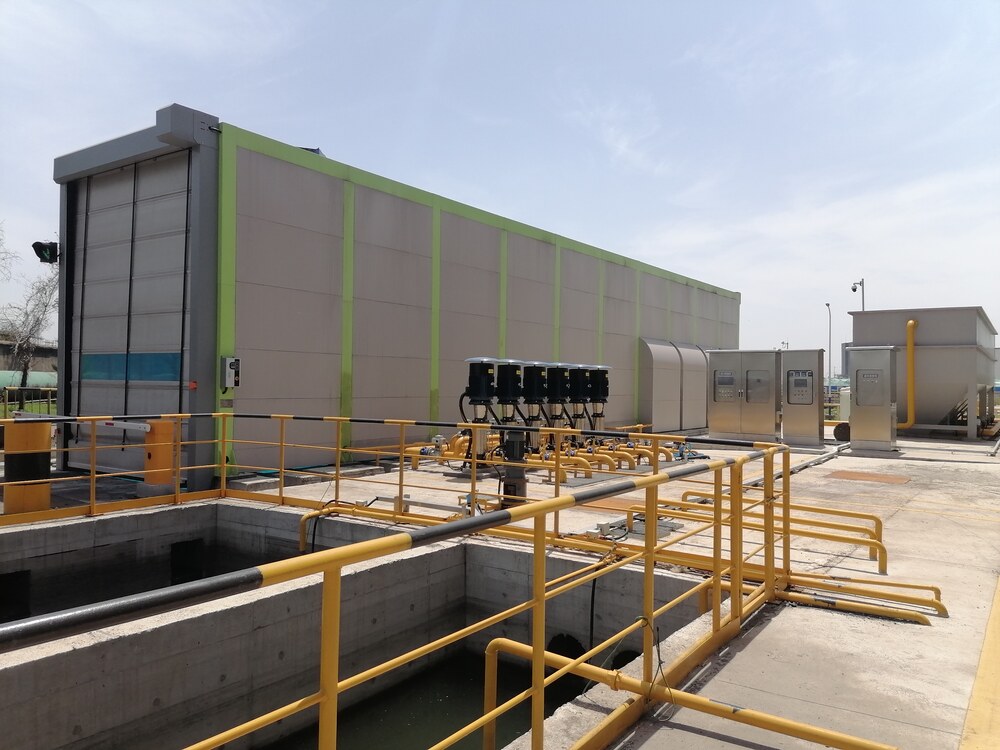
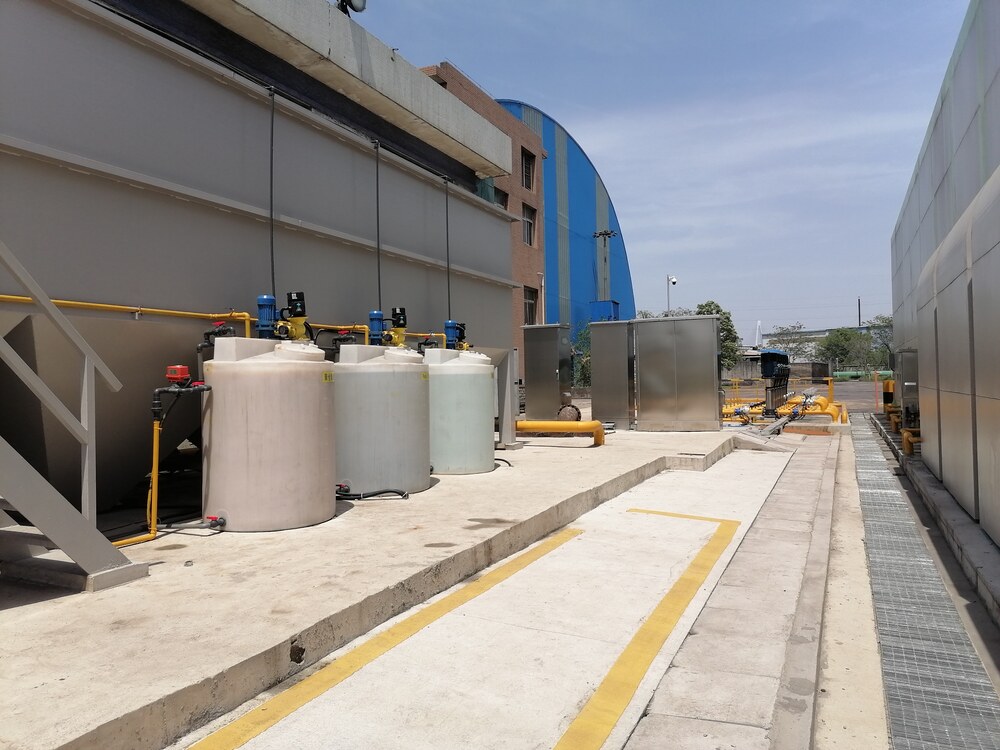
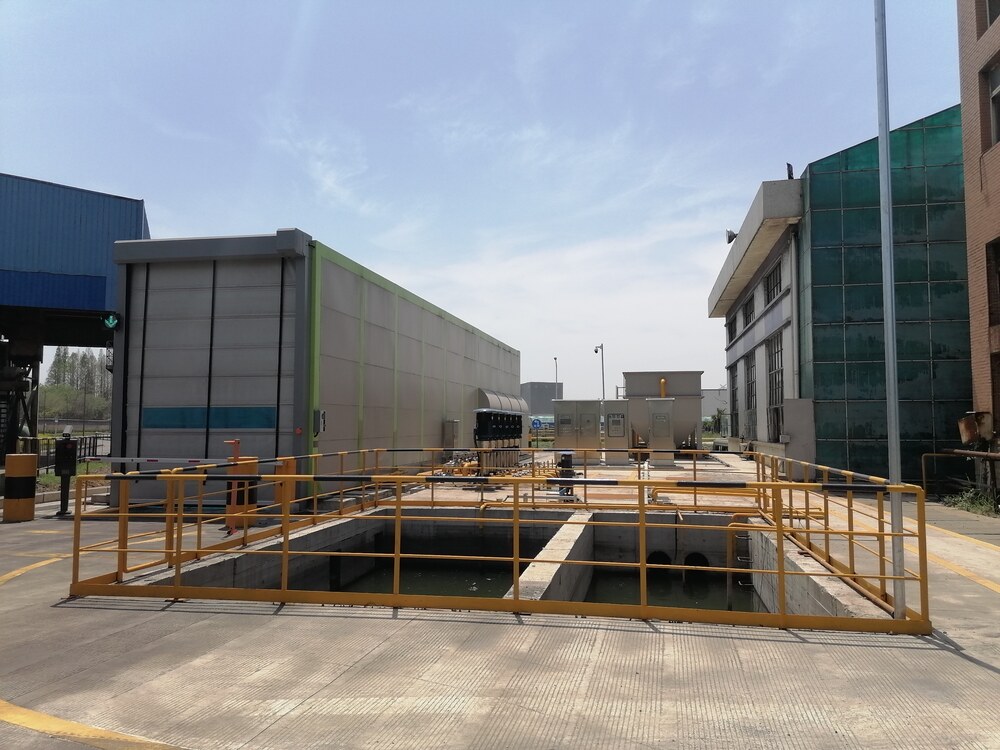
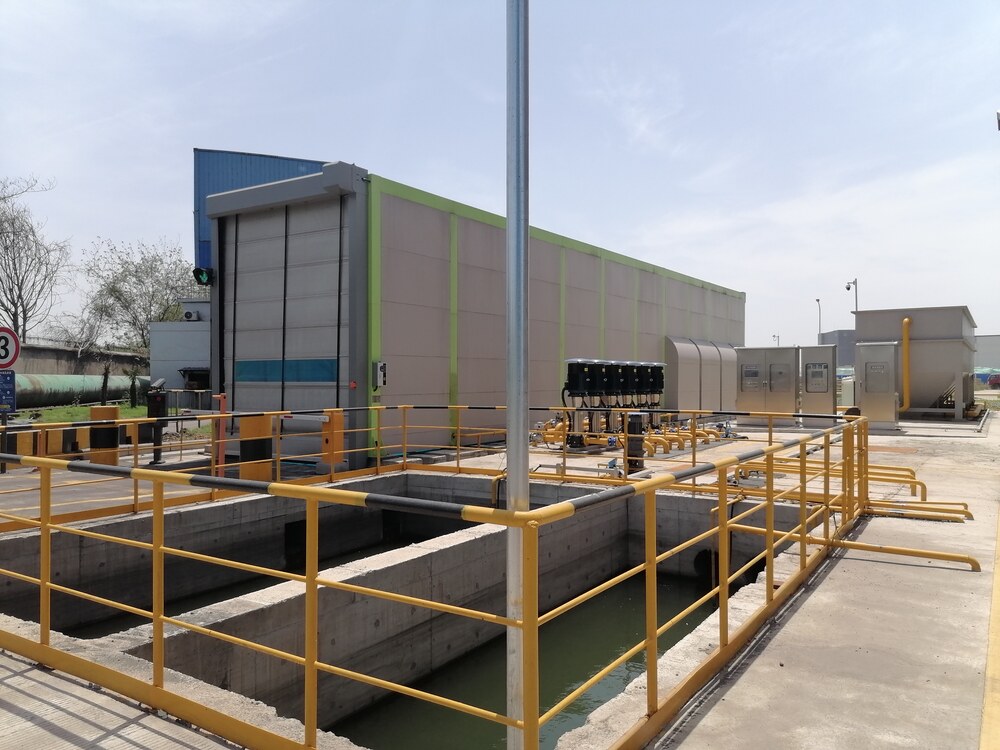
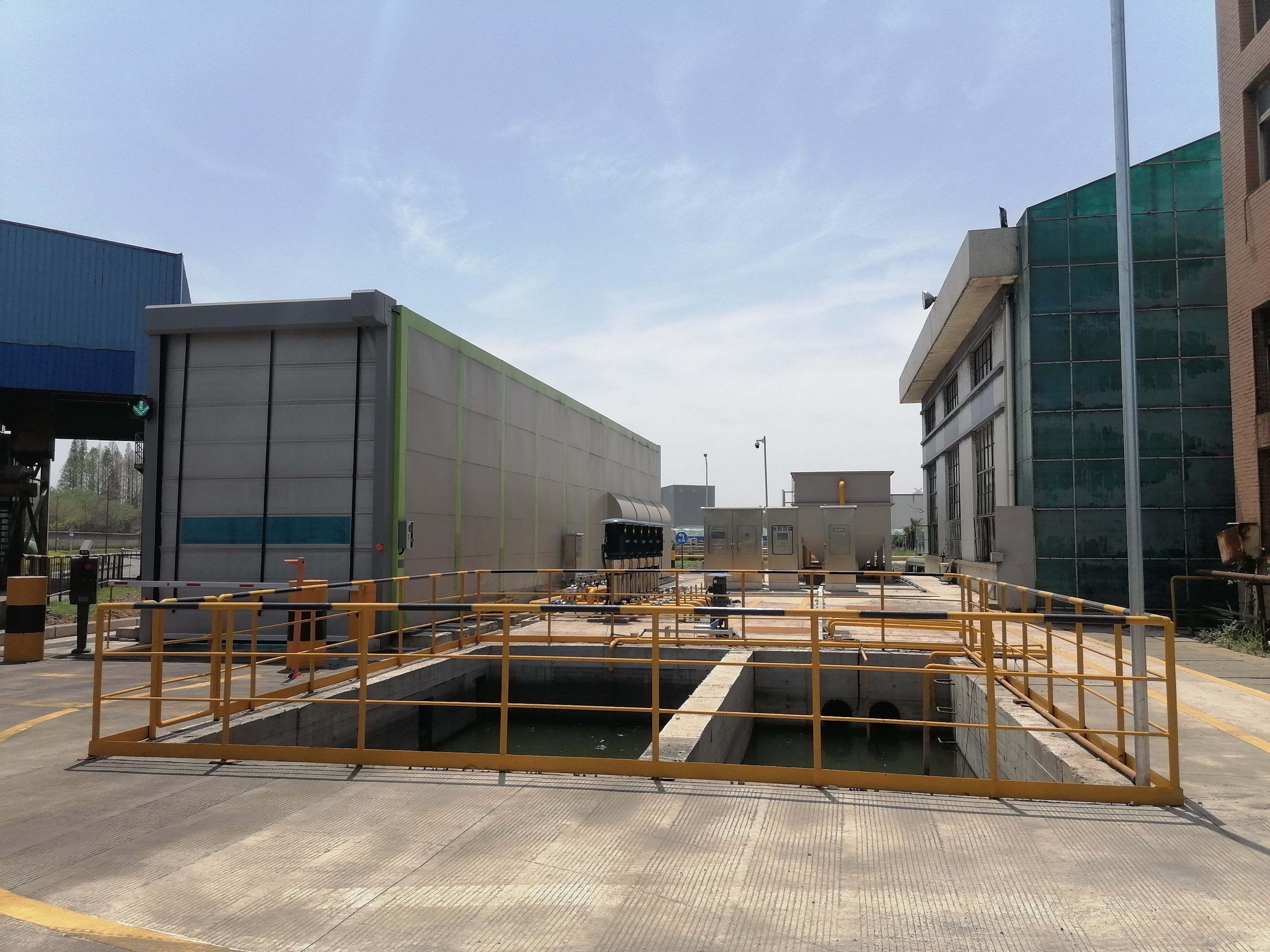
Washing and recovery form one closed loop: the wash zone is modularly grouped (5 m × 4 m per group) so underbody and side sprays jointly cover the whole vehicle; wash water is passed through an inclined-plate settler to separate sludge before reuse, with the settler mounted above-ground outdoors on a reinforced-concrete base. 设备安装实拍 · 格栅地基 | Installation · grating foundation Modular grouped structure — Equipment size 10 m × 4 m × 5.5 m for the fully enclosed option, in modular groups of 5 m × 4 m × 5.5 m; the drive-through high-pressure system supports manual, fully automatic and touch-screen operation. Full-vehicle coverage — The underbody system washes the chassis, tyre surfaces and tread gaps through 360°; the side system works in 5 m groups across both flanks and tyre sidewalls; a desilting line flushes the trenches and side silt beneath the bay at the touch of a button. Load-bearing steel structure — The integral load-bearing frame is fabricated from square and angle steel welded transversely, set into both sides of the wash zone flush with the ground, with vibrating drainage. The foundation uses grating panels designed for 150 t traffic. Inclined-plate settler — Applying the shallow-settling principle to shorten particle settling distance and increase settling area: plates are extended to 1.5 m, raising separation efficiency 1.5–2.0 times over conventional inclined plates and saving 80% of the footprint versus a conventional radial settler. Plates are set at 60° with 80–100 mm spacing and a backwash facility. The tank is Q235B, 12 mm wall, internally coated with two coats of epoxy coal-tar and externally with two primer coats, an intermediate coat and two top coats, to Sa2½ surface preparation. The overflow launder is 304 stainless steel, 5 mm thick, with a 90° triangular weir.
Project Details
- 沉淀池与管线实拍 | Settling basin and piping
- Washing pressure 1.6 MPa with a throughput of 40–60 vehicles per hour and a total installed power of 45 kW.
- Water consumption is 700 L per vehicle; wastewater is settled and filtered in the inclined-plate settler and then recirculated for washing, saving water.
- Three wash pumps at 15 kW, 160 m head and 20 T/h allow one-touch switching to silt flushing.
- Electrical components come from established imported brands including Schneider, Mitsubishi, Omron, AirTAC, Banner, Turck and Taiwan Open, with inverters, photoelectric and proximity sensors, PLC, computerised fault alarm detection, automatic body sensing and photoelectric positioning.
- The warranty runs for one year from acceptance after installation and commissioning (including wear parts), with lifetime repair service.
- Delivery terms were explicit: shipped to the WISCO project site by 6 December 2022, as a complete machine, in wooden crates, subject to Class C inspection.
The hard part of washing heavy vehicles is what you cannot see — the chassis and tyre tread gaps. Covering those blind spots with 360° underbody washing plus side sprays in 5 m groups, then separating sludge in an inclined-plate settler for water reuse, is what makes “washed clean” and “water- and space-efficient” achievable at the same time.
Project Gallery